

For automakers, the festive season is about raking it in through ramped up sales and attractive consumer offers. However, despite the robust demand, what may spoil the party this year is a global shortage of semiconductors.

Be it in terms of looks, features or safety, the Indian auto market is growing up

Major automakers, including Maruti Suzuki, Hyundai, Tata Motors, Mahindra & Mahindra, Kia, Toyota and Honda, on Thursday reported healthy growth in passenger vehicles sales in June, recovering from the disruptions induced by the second wave of COVID-19. The country's largest carmaker Maruti Suzuki India (MSI) posted total sales of 1,47,368 units in June, up from 46,555 units in May. Its domestic dispatches to dealers last month stood at 130,348 units, up from 35,293 units in May, as easing of COVID-related restrictions helped the auto major to dispatch more units to dealerships.

A clutch of automakers including Maruti Suzuki, Hero MotoCorp, Mercedes Benz India, Eicher Motors, TVS Motor, and Isuzu Motors India announced they had got the clearance from the governments of the states they operate in to resume operations.

Ferrari will present their new Formula One car online on January 30, a day after McLaren take the wraps off their Honda-powered challenger.

India is a market for low-priced cars with low running costs. The global majors don't have models that fit the bill; only Maruti and Hyundai have successful entry-level models, observes T N Ninan.

Carmakers Mercedes-Benz, Audi, Renault, Kia India and MG Motor on Wednesday announced plans to hike vehicle prices from January to partially offset the impact of rising input costs. They join the likes of market leader Maruti Suzuki India and Tata Motors, which have also made the year-end announcements to raise prices from next month. Audi India said it will increase prices of its entire model range by up to 1.7 per cent, while Mercedes-Benz India noted it will hike the prices by up to 5 per cent from January 1.

With fast changing mentality of the crowd here, the automakers are creating their own categories to attract more and more buyers.
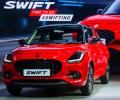
Swift Dzire has clocked 2.5 million in sales, and you might, in a non-too-distant future, see headlines that the DZire has done 3 million as well, observes Suveen Sinha.

Besides their country of origin, General Motors, Ford Motor and Harley-Davidson have another trait in common: all three have failed in India, the world's fifth largest automobile market. All three of them took a tough call to de-prioritise India as a market amid disruption from heightened regulations and sharper focus on capital allocation by the parent.

The Pune-based research institute will design and develop car batteries and offer the technology for mass production.

Auto majors, including Maruti Suzuki India, Hyundai and Tata Motors, on Sunday reported high double-digit growth in their domestic passenger vehicle sales in July riding on stabilisation of macro-economic factors and better consumer sentiments. Similarly, Honda, Nissan, MG Motor and Skoda also reported healthy growth in their sales last month leveraging on improved market mood amid prevailing lower coronavirus infection rate, despite supply constraints of semi-conductors. The country's largest carmaker Maruti Suzuki India's (MSI) domestic sales increased by 39 per cent to 1,41,238 units last month as against 1,01,307 units in July 2020, the company said in a statement.

India isn't a very popular sports car market, simply because whatever is on offer in the country is very expensive

As auto enthusiasts in India wait eagerly for the launches slated for 2013, we take a brief look at some of the most popular upcoming diesel cars of the New Year.


Reflecting the woes of the Indian automobile industry, the country's car exports remained flat at 550,466 units in 2013-14, during which domestic sales fell for the second consecutive year.
Amongst cars sold in the mid-size category (domestic sales) between April 2007 and March 2008, diesel variants outsold petrol car models roughly in the ratio of 7:3. That means over 70 per cent of the over 1,79,493 mid-size cars sold in the domestic markets were diesel models. Diesel mid-size cars on an average are priced 15.5 per cent more than the petrol variant. Overall, the mid-size category, petrol and diesel models included, grew by 14.6 per cent.

From Audi A8 to Honda Civic, here's what the auto industry has lined up in 2019.

Maruti sold 191 units of SX4 sedan in January 2014.

Cumulative sale at India's top six passenger vehicle (PV) makers dropped 0.7 per cent to 267,000 units, from 269,000 a year before.

Accord has registered sales of over 25,000 units since its launch in India.
Honda, Mahindra and General Motors will launch three stunning cars starting from the first day of the month.

Maruti's Alto retained the best-selling model tag in January with 22,998 units as against 21,462 in January 2016.

'More than one brand in a showroom is too risky because customer loyalty in this market is low. Most people don't drive different cars made by the same manufacturer for a lifetime, they experiment.'

Major carmakers like Maruti Suzuki and Honda did not have diesel technology and it is in the last 3-4 years that they invested in diesel vehicles owing to shift in demand towards such models
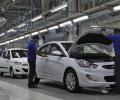
Automobile (auto) retail sales in India grew by an impressive 14 per cent in July compared to the same period last year, driven by a surge in the rural economy, good product availability, and product launches. While passenger vehicles (PVs) saw a 10 per cent increase during this period, inventory levels have surged to a historic high of 67-72 days in PVs, equating to Rs 73,000 crore worth of stock, according to the Federation of Automobile Dealers Associations (Fada). This poses a risk to dealer sustainability. Inventory levels in July 2023 were only 50-55 days, equating to a stock worth Rs 49,833 crore. In June 2024, inventory was between 62 and 67 days, with a stock value of Rs 60,000 crore.
With increasing competition and slowdown, auto firms are shedding old vehicles to make way for new ones.

One can see the scale of recalls going up as the market expands.
Besieged by rising steel prices, the domestic passenger car manufacturers are gearing up to raise prices again. Barely a month ago, Maruti Suzuki, Hyundai Motors India, Mahindra & Mahindra, Tata Motors and Honda Siel had effected price increases of Rs 6,000 to Rs 30,000 across models.

With multiple options in the compact sport utility vehicle (SUV) and compact sedan space, the mid-size sedan seems to be losing its charm among customers.

Maruti Suzuki and Hyundai would make the largest gain.

'This is purely a brand sale. It includes the Ambassador with its variants. Peugeot is likely to relaunch the brand with multiple variants.'

It is immediately not clear how GST will impact the mass car market. Experts, however, say the level of tax on smaller cars will have to be at a differential to the sedans.

Media report says unfavourable excise structure, large investments are the main reasons

Formula One's first pre-season test ended in Jerez with Ferrari's Kimi Raikkonen fastest.

Sources claim that 68-70 per cent of the workers at Halol are permanent ones, while the balance is tilted towards contractual workers at Talegaon.

Eyeing the volume segment in India, big car makers, including Honda, Toyota and Volkswagen, on Tuesday showcased their small cars here on the first day of the week-long 10th Auto Expo.

Prices across all models starting from Eon to Santa Fe has been hiked in the range of Rs 15,000 to Rs 127,000
Some of facelifts in India will include cars from highly prominent car makers.
